We didn't invent gyms because we loved exercise.
We invented them because machines stole our need to move.
A pattern that has repeated every technological era. And it's about to repeat again, with stakes we better prepare for.
1850s | Industrial Revolution Machines replaced physical labour. We celebrated. No more breaking our backs.
What followed: bodies that forgot how to move. Muscle atrophy. An obesity epidemic that's still accelerating.
What we built to compensate: An entire fitness industry. Gyms, yoga, Peloton. We now pay to do what we used to get paid for.
1990s | Digital Revolution The internet replaced physical proximity. We celebrated. Connect with anyone, anywhere.
What followed: relationships that forgot how to be present. A loneliness epidemic. More "friends" than ever, more isolated than ever.
What we built to compensate: Therapy at scale. Meditation apps. Digital detox retreats. "Mindfulness" became a billion-dollar industry.
2010s | Social Networks Algorithms replaced attention curation. We were cheerful. Infinite content, perfect discovery.
What followed: attention hijacked by design. Our instincts auctioned to the highest bidder. Addiction loops engineered by PhDs.
What we're building to compensate: Screen time limits. Dopamine fasting. A growing "slow media" counter-movement.
2020s | Generative AI LLMs replaced content creation. We celebrated, again. Democratised creativity. Productivity explosion.
What's following: We can't tell what's real anymore. Trust is scattering. Shared reality is dissolving.
What we're starting to build: Verification systems. Provenance tracking. Authenticity markers. The infrastructure of trust.
2025+ | AI Agents AI is replacing thinking and memory. We're stunned. Clawdbot. Personal Jarvis. Superhuman productivity.
What's coming: Cognitive atrophy. MIT already showed that heavy AI users have measurably weaker brain connectivity. And what's even more scary: the effects persist even after they stop.
What we need to build: ???
This is where the pattern breaks: now.
We know how to build gyms for muscles.
We know how to build therapy for presence.
We're learning to build tools for attention and trust.
But what's the gym for the mind?
Not brain training games or ginko tea. I mean: what systemic intervention prevents cognitive atrophy at scale when we hand over our thinking and memory to AI?
One question keeps me up at night: beyond AGI, when AI does everything we can do, but better.
It won't just take our labour, connections, attention, trust, cognition.
It might take our souls, our purpose.
What do you build to compensate for that?
I don't have an answer.
I've been sitting with this since 2016. 10 years ago I had (my first and luckily only) panic attack about how AI would impact humanity. With GPT 3.5 and early image generators it became impossible to ignore. Since then, I'm watching the sh't unfolding that scared me to feeling I'd die. No, I am actively participating in it. I'm still building with AI every day. The dissonance is real.
I have noticed something in the pattern lately:
Every decay forced a new form of intentionality. Of choice.
We had to choose to move our bodies.
We had to choose to be present.
We're learning to choose where we place our attention.
Probably we'll have to choose to think for ourselves.
And eventually, choose what makes us human.
Progress doesn't rob us. It forces us to be intentional about what we were taking for granted.
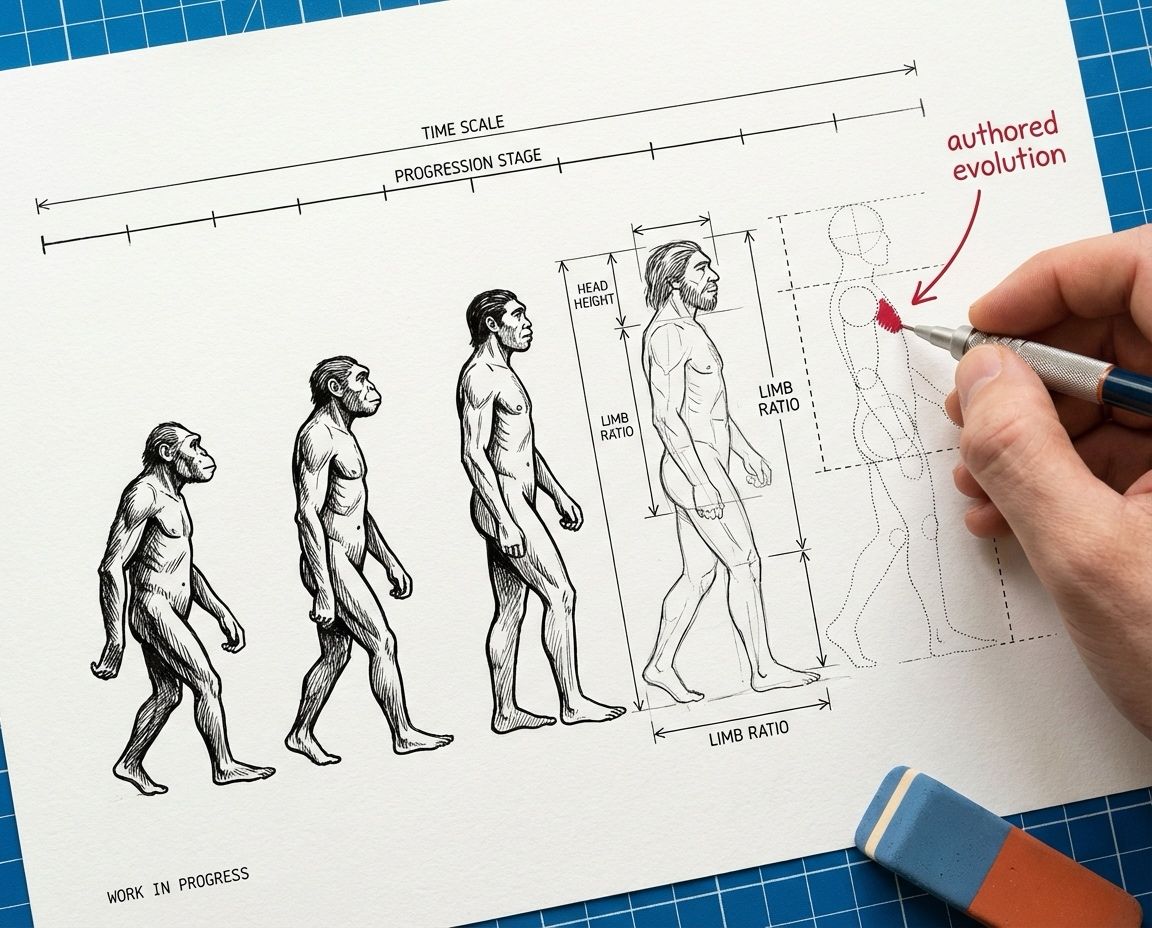
I wouldn't call it dystopia, rather authored evolution.
It might be too early to ask these questions.
But is it really, given exponential development?
What do we need to build for cognitive fitness at scale?
What do we build when ASI takes our purpose?