How to build a brand that is relevant to humans and agents?
Your product can be copied in a weekend. Your brand, people say, cannot.
That belief has hardened into two camps. One says brand is the last moat – the only asset nobody can clone, however good the tools get. The other says AI is about to make it irrelevant, because agents will compare on specifications and buy on price. Both are wrong, and for the same reason: almost nobody can say what a brand actually is.
So here is what I tell founders when this comes up:
Imagine I share Coca-Cola’s secret recipe with you, including every ingredient and ratio.
Then, I share the bottle shape, the specific red HEX code, and the script typography with you.
Finally, I give you the bottling plants, the capital, the trucks, and distribution across more than 200 countries.
Now, do you own Coca-Cola?
Nobody ever says yes. And when I ask what is still missing, the answer is always the same: the history. The Christmas ads someone's grandmother remembers. The trust. The habit. The fact that people do not want a cola; they want a Coke.
None of this is in the bottles or the buildings. It sits in a few billion heads, and it took 130 years of consistent behaviour to put it there.
I have spent more than two decades obsessing over brands, and I am still fascinated by their rational and irrational sides. Especially by how much of a company's success they quietly carry, and by how badly most of us, me included, have understood the mechanism underneath.
Here is what I have concluded about brands, including what changes when the buyer is a machine.
You cannot know before you buy
Almost everything can be copied now with a few thousand tokens over a weekend. Your website? Vibe-copied in a day or two, for pocket money, by a teenager. Your core product features? A few days for a smart team. Your brand identity, colours, fonts and tone of voice? An afternoon and a $20 Claude subscription.
So the Coca-Cola question might sound like a museum piece in this context. It is not. It can be asked about your company today.
Brand is the answer to a question no technology has been able to answer: How good is something you haven’t had? Unanswerable for a drink, a database as well as a hire. Every purchase is a bet you place without the evidence that arrives only by trying.
A brand's role is not to rescue people from excessive choice, which, contrary to marketing folklore, is a weaker effect than is commonly thought1. Brands earn their place when options are hard to compare, when the buyer does not yet know their own preferences, when the decision is consequential, or when quality cannot be checked before buying. Conveniently, this describes almost everything any of us sell.
So we decide from memory
Since you cannot know before you buy, you fall back on what you remember. Memory and anticipation are associative: something in the present pulls up something from the past, unprompted.
The trigger has a name: it is a cue.
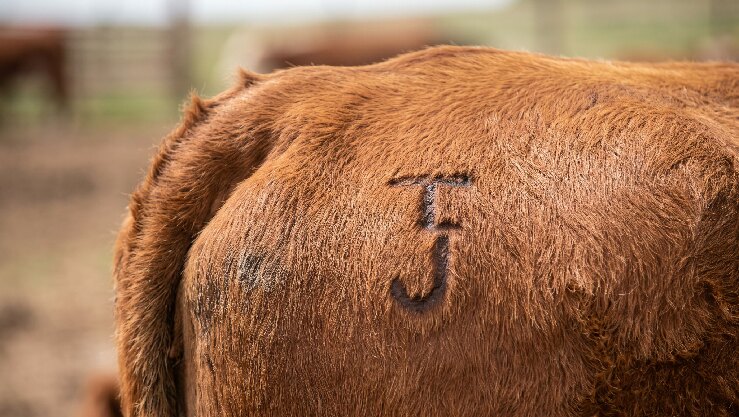
Cattle were branded with a heated iron on their skin to tell them apart. That mark is the oldest cue we have – it compressed ownership and reputation into a visible cue: a buyer could retrieve what they knew about the herd before inspecting a single animal. The same mechanism now sits on nearly everything we buy.
This leads me to a definition of what a brand that holds up better for me than anything I have taken away from books or branding workshops over the past decades:
A brand is a stored association between a cue and an experience. Marketing only decides which cue fires. Experience decides whether anything is there to retrieve.
How firmly the retrieval happens depends on three things2:
Frequency – how often the experience was had, which is what a habit actually is.
Similarity – how closely the cue resembles what is stored.
Interference – how much else competes for the same retrieval.3
Emotional intensity or surprise might be another factor I would add intuitively here, yet it is not part of the retrieval research.
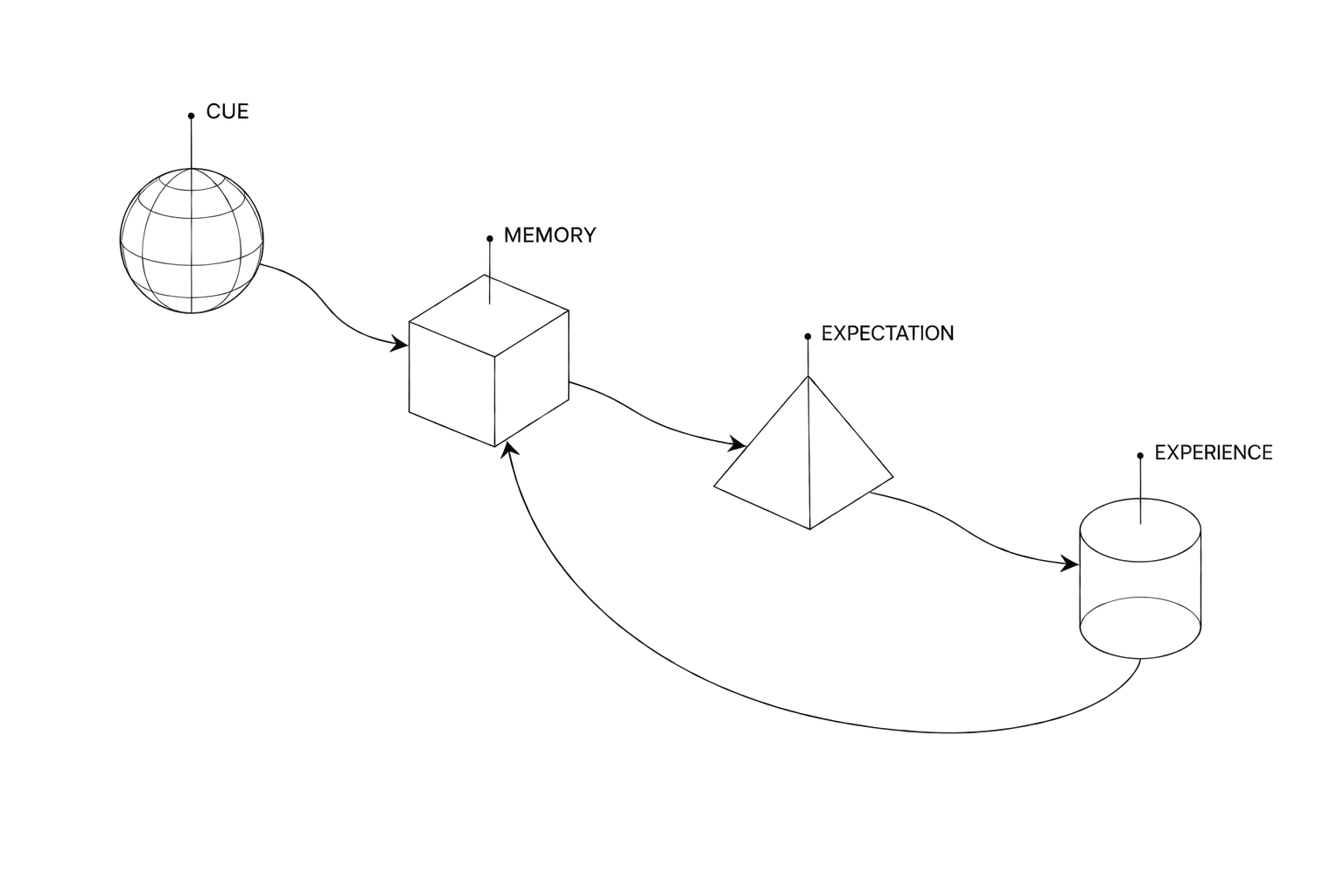
An ad carries no information and no utility of its own. It is a cue that pulls an existing memory to the surface. When Wrigley was asked why he kept advertising a gum everybody already knew, he asked back what happens to the train if you turn off the electricity.
The retrieval reaches deeper than most people expect.
In a 2004 study, blind Coke and Pepsi preferences split roughly evenly. In a separate test, people preferred a cup labelled Coke even though both cups contained Coke; a Pepsi label had no comparable effect. In the scanner, a Coke cue recruited memory-related and prefrontal regions more than a neutral cue.4 The cue changed preference even when the drink did not. In that precise sense, brand creates the experience of a product.5
Cues are physical, too. I worked out my own theory years ago about how the movement of our mouths when we say a brand name relates to what that name ends up meaning to us. Saying mymuesli makes the tongue and jaw move as if you chew, swallow and finish with a smile. Say it out loud once. You will feel it. (Branding bonus: whoever sees you say it will associate you smiling when saying 'mymuesli'.)
I call this oro-kinetic symbolism, as the sister to a linguist's phonetic symbolism. While this is more an observation than a finding I made, some research supports this idea6. Most was lucky coincidence, yet I am convinced it played a role in mymuesli being measured as the strongest brand in German food retail7, ten years after we launched.
The three-layer loop that anchors a brand in memory
There are three layers that build brand in a customer’s perception:
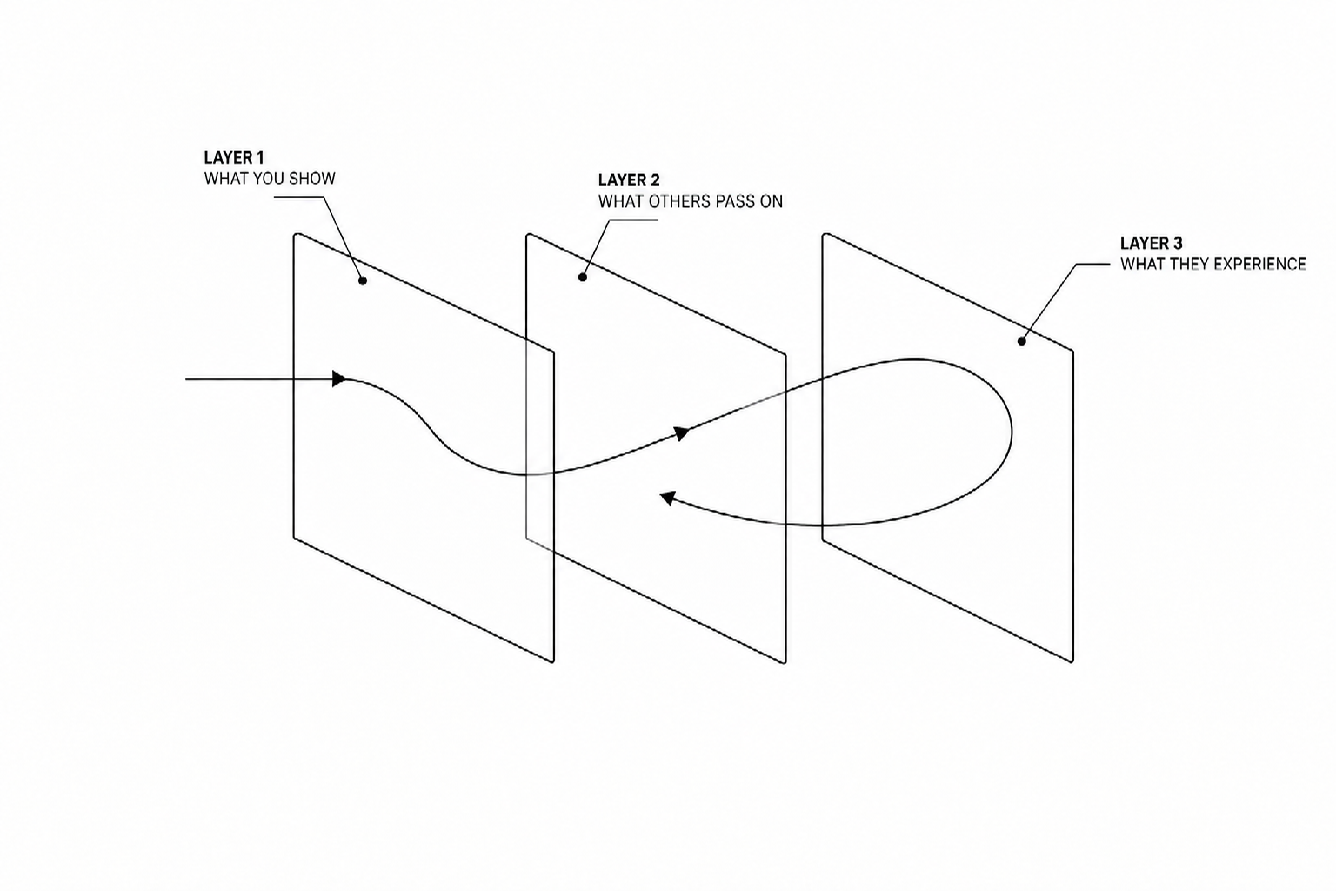
Layer one, what you show. Design, copy, tone, price. Some cues arrive preloaded: black and gold can suggest premium, pink can cue feminine positioning, angular forms energy and rounded forms calm. They are neither first-hand nor second-hand evidence about you; they are borrowed from culture. They position you before anyone knows you, yet remain generic and easy to copy.
Layer two, what other people pass on. Reviews, referrals, who else uses it, whether you are somebody's default. Also a cue that enables other people to install associations in someone who has never touched the product. Borrowed, weaker than first-hand experience, and still enough to influence somebody's preference.
Layer three, what they experienced themselves. Nothing produces a user’s own memory as their own lived experience does.
Which makes the limit of layer one obvious: Yes, someone can clone your visual identity in an afternoon, but a copied identity does not retrieve the copier's memory8.
To get a system that runs your brand, put the layers in motion: You behave a certain way. This gets experienced by a person. Then it leaves your control – they tell somebody, that somebody forms an expectation without ever having touched your product, chooses on the strength of it, has their own experience, and passes that on too.
Your company feeds the loop. But past a certain point, your company doesn’t play an active part in the loop anymore. You cannot install an expectation; other people do, favourably or not.
Does all this matter if you are pre-product? No customers, no layer three, no loop? Not quite. During my time at Project Eaden, we invested in our brand two years before there was anything to sell; we aimed at expert hires, investors and retailers. I cannot prove it worked; several factors came together in the end, not just the brand. But within a year, we hired 25 field experts from 16 countries, and they all arrived believing what we did was worth doing.
Layer three does not have to start with customers.
Mind, not every voice in layer two counts the same. A named customer saying in public that you were the reason a migration didn’t fail is different from a thousand anonymous review scores. The more authority behind the source, the bigger the impact – for humans, and for models.
B2B vs consumer brands: same mechanism, different uncertainty
For consumers, the uncertainty is about pleasure and identity, so repeated good experiences turn into habit, maybe even into fandom.
For businesses, where the buyer is often a committee and rarely the user, the uncertainty is different. Not "will I enjoy this" but: will this vendor exist in three years? Will the roadmap and the ROI they showed me actually ship? How does their support behave at three in the morning when everything is on fire? And the quiet one: what happens to me, personally, if this goes wrong?
None of that can be verified before signing, and no pilot resolves all of it. Same mechanism – you buy the expectation because you cannot buy the certainty. The feeling the brand promises isn’t delight. In B2B, it’s relief.
Founders selling to businesses may think brand is not their problem. They treat it as decoration and cannot see a ROI. They look for it in pricing power and cannot find it. The return of brand sits in a different line of the P&L: whether you make the shortlist at all, how much proof a potential customer demands before signing, and whether an outage ends the contract or becomes a phone call. Believed capability, shorter sales cycles, forgiveness. Not a premium.
Certifications, customer logos and SLAs look like rational arguments rather than brand. But nobody reads the audit report behind a SOC 2 badge. They see the badge and infer a class of company: one with a compliance function, one with something to lose. That is not merely an argument. It rather is a borrowed cue. Cattle branding, wearing a business suit.
"Nobody ever got fired for buying IBM" works the same way. It became an industry catchphrase and endured for forty years – free branding by collective association via layer two.
A marketing professor would object that much of this is closer to reputation than to brand. True. The mix shifts by context: in enterprise infrastructure, reputation outweighs identification. In consumer goods, it is usually the reverse.
When the buyer is an AI agent
An agent has never used your product and doesn’t feel nostalgic about Christmas ads. Unlike a human, it also has no biological body contributing a felt response to the decision.9
An agent can trial software, run benchmarks and retain logs. When it does, those become its own first-hand evidence. But the agent making the first shortlist usually has none of your customers' felt history. On that first pass, it reads layers one and two; layer-three experiences are almost never first-hand.
Layer one usually carries far less decision weight for an agent. It can parse a visual identity, language and tone, and recognise black and gold as premium, but it does not feel those cues. Unless the human asked for "premium-looking", they are mostly metadata beside compatibility, price, benchmarks and documented outcomes.
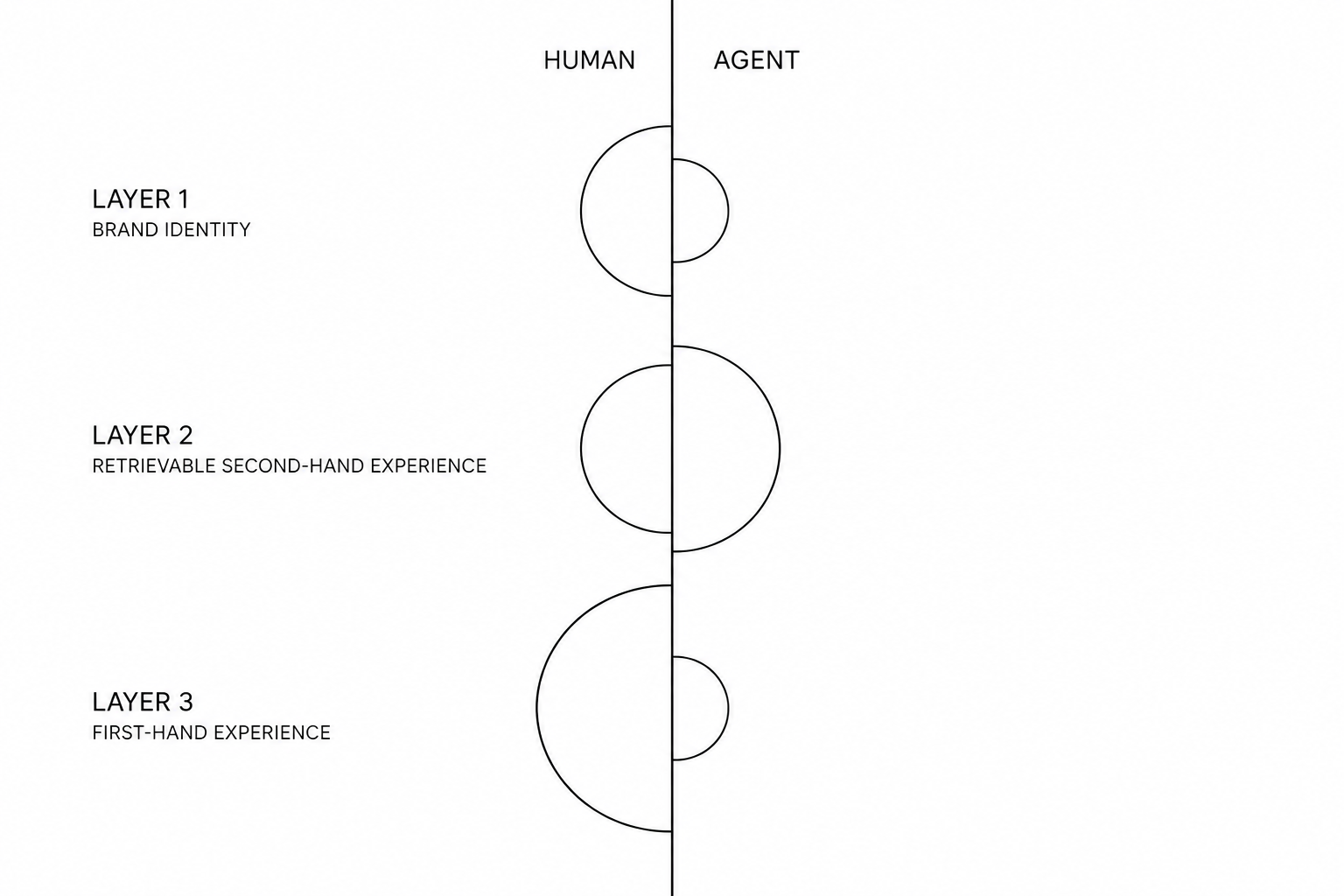
What happens to the retrieval factors on an agent’s first pass? They return in a different currency. Frequency becomes how often you appear in retrievable sources. Similarity becomes how closely they match the request. Interference becomes how many competitors use the same language.
A vague claim is similar to every query and gets beaten on each one by somebody more specific. This is why it is more important than ever to state what you are not for. Specificity is interference reduction – helping humans and agents navigate options.
When an agent does the weekly shopping, the label may never be seen and the shelf does not exist. Consumer brands spent a century buying that shelf space and the half-second it takes people to recognise it. Now, this may no longer be where the decision is made. Purchase decisions in B2B were always agent-shaped – certifications, references and benchmarks were built to travel between people long before anyone put the word agent next to AI.
Also, agents are not neutral. They inherit the objective they are given, the data they can reach, the model’s tendencies and the platform’s incentives. Research on language models as recommenders suggests that popularity can affect rankings, although not necessarily more than in traditional recommender systems.10 The new gatekeeper may look neutral while quietly favouring incumbents.
Which invites an obvious move, and I would rather make that argument myself than have it made in the comments: If layer two is the valuable one, why not buy it? Paid reviews, analyst relations, influencer spend, pay to be somebody's default. It works; it is a line item, and a retrieval system may struggle to distinguish earned evidence from bought evidence.
So why not simply do that? Three reasons.
You can buy volume. You cannot buy authority. The sources that carry weight are the ones that are expensive or impossible to purchase, because their value comes from the fact that whoever said it had something to lose.
Bought expectation decays. Layer two without layer three is a lease – a cue with nothing stored behind it retrieves nothing. Churn shows up, renewals do not happen, the reviews turn, and the model reads the newer material too.
Layer three is the only factory. Every piece of layer two ultimately was manufactured by somebody actually enjoying your product. You can buy the distribution of that evidence. You cannot buy its production.
So, brand is not an untouchable moat. Expectations can be copied or bought. But doing so is slow, expensive, largely outside your control.
What genuinely changes with agents is smaller than "AI kills brand", and more uncomfortable. Today, a champion inside a company can fight for a vendor they like: override the scorecard, put you back on the list, spend social capital on you. When the agent produces the shortlist and the human only approves it, that stops.
You do not lose the deal. You lose in a round where nobody was there to be persuaded.
How to build a brand that is relevant to humans and agents?
I tell tech founders that brand building is a continuous reverse-engineering task. What question do you want to be the answer to? Whose memory has to hold it? And what cue will pull it up?
Start with the moment, not the market. "Mid-market fintech in Europe" is a segment and tells you nothing about when anyone thinks of you. "It is Thursday, the audit is in three weeks, and the person responsible has just realised the current system will not pass" is a moment – a trigger, a person, a deadline. In the language above, it is a cue chosen for its similarity to the situation that creates the want. In the agent era, it’s also quite close to what somebody types into the prompt.
Then write the expectation as a prediction rather than as adjectives. Too many workshops I have sat in ended with three words like innovative, trustworthy, human. They are unfalsifiable, and no purchase decision was ever settled by them. Write the sentence you want a customer to say out loud. Ask ten customers whether they would say it.
Then make what sits behind the cue retrievable, because machines increasingly read before humans do.
- Live in other people's sources. Your website is close to the least important document about you that you own. Third-party endorsement carries more weight than self-promotion.
- Go after authority, not volume. One customer willing to put their name to a specific outcome beats a campaign of anonymous mentions – and it is the part a competitor cannot order in.
- Say out loud what you are not for. Specificity beats reach.
- If a demo request is the only path to your pricing, you barely exist to a machine. Public numbers, public docs, plain text or an MCP.
- Publish the proof with the method attached – benchmarks with how you measured, uptime history rather than a green badge.
To build a brand, keep feeding the loop. Use marketing to trigger cues, and refresh memories by shaping experiences people will happily share.
There are cases where almost none of this matters. If the spec fully describes the thing, switching costs nothing and a machine is buying a commodity – compute, bandwidth, basic components; in that case you compete on price and reliability. If you are a monopoly, expectations do not change behaviour, because there is no behaviour to change. In a winner-takes-all market, the network is the moat; a brand brings you to the tipping point, then it rides along. A strong position doesn't always mean a strong brand.
Back to the two camps.
Brand is not the last moat. Agents do not make brands irrelevant either. Agents re-price the three layers of a brand. Everything you show is cheaper to (re)produce. Everything people experience, repeat and make retrievable becomes more valuable – because credible evidence grounded in real performance is the hardest part for a competitor to copy in a weekend.
What did your company do lately that someone will keep repeating years from now – and could a machine find it?
Scheibehenne, Greifeneder & Todd (2010): A meta-analysis of 50 experiments put the average choice-overload effect close to zero. ↩︎
Bordalo, Burro, Gennaioli, Nacamulli & Shleifer, Ads as Cues, NBER Working Paper, October 2025. Builds on Bordalo et al. (2020) on memory and choice. ↩︎
In this framework, mindshare is the probability that a brand is retrieved from memory in a relevant buying situation. For agents, the analogue is the probability of being retrieved and ranked from the claims and evidence they can access. ↩︎
McClure et al. (2004), Neural Correlates of Behavioral Preference for Culturally Familiar Drinks. ↩︎
My thanks to John Patroulis for seeing and articulating this in his feedback on an earlier draft. ↩︎
Topolinski, Zürn & Schneider (2015), What's in and what's out in branding? A novel articulation effect for brand names. ↩︎
Der Neuroscape-Markenmonitor "Food 2017" – Deutschlands stärkste Lebensmittelmarken: die Studie zur impliziten Markenwahrnehmung. ↩︎
See research on category/colour norms, logo-shape associations, and cue misattribution. Context, culture and personality play a big role here too. To predict what resonates with your target audience before spending money on it, I built RSN8 Labs. ↩︎
Emotional and bodily states influence decision-making, but the stronger claim that bodily feedback is necessary in the sense proposed by Damasio’s somatic-marker hypothesis remains disputed. See Damasio (1996) and Dunn, Dalgleish & Lawrence (2006). ↩︎
Lichtenberg, Buchholz & Schwöbel (2024), Large Language Models as Recommender Systems: A Study of Popularity Bias. ↩︎